Share a Coke: The Marketing Campaign That Personalized a Global Brand
Marketing campaigns often focus on increasing sales, but only a few become part of popular culture. One of the most successful examples is Coca-Cola’s Share a Coke campaign, which transformed a simple bottle of soda into a personalized experience that millions of people wanted to share.
Originally launched in Australia in 2011, the campaign quickly became a worldwide success and is now considered one of the greatest examples of personalized marketing.
The Idea Behind Share a Coke
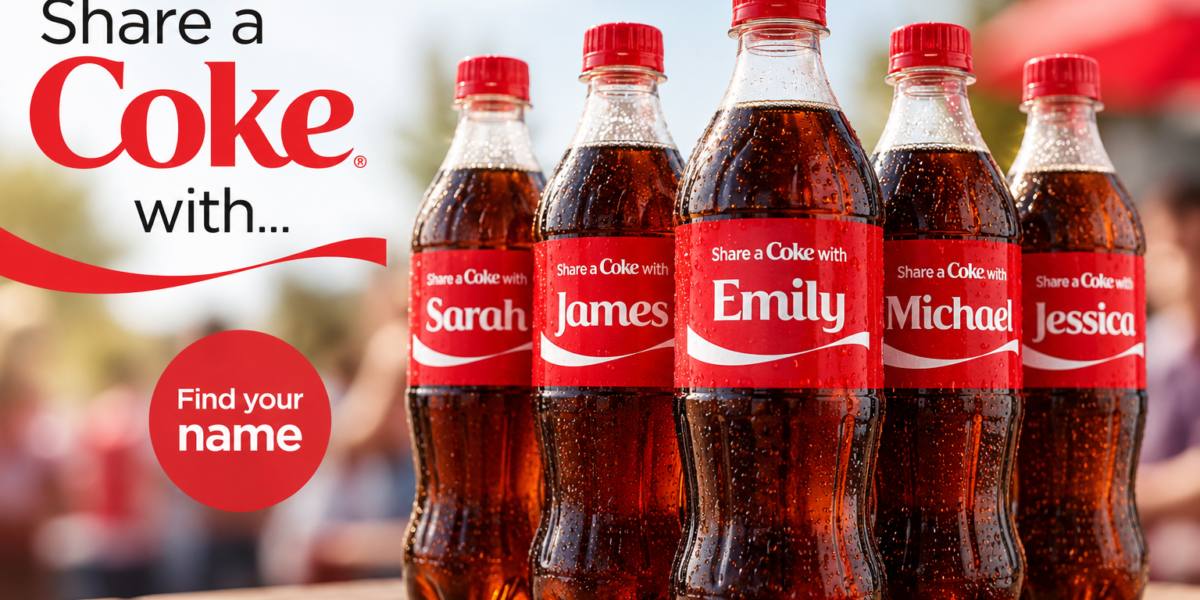
Instead of printing the traditional Coca-Cola logo on bottles and cans, the company replaced it with some of the most popular first names in each country.
Each bottle featured the phrase:
“Share a Coke with…”
followed by a person’s name.
This simple idea encouraged consumers to search for bottles with their own names, as well as the names of friends and family members.
Why the Campaign Was So Successful
The campaign worked because it connected with consumers on a personal level.
Rather than selling a beverage, Coca-Cola sold an emotional experience.
Customers enjoyed finding their own names, gifting personalized bottles, and sharing photos on social media.
The campaign turned ordinary consumers into brand ambassadors.
Personalization at Its Best
One of the biggest reasons behind the campaign’s success was personalization.
Seeing your own name on a product creates an emotional connection that traditional advertising cannot easily achieve.
Consumers felt that Coca-Cola had created something specifically for them.
This personal touch dramatically increased customer engagement.
Social Media Amplified the Campaign
As people found bottles with their names, they naturally shared photos on platforms like Facebook, Instagram, Twitter, and Snapchat.
Millions of user-generated posts helped Coca-Cola receive enormous amounts of free publicity.
The campaign became viral without relying entirely on traditional advertising.
User-Generated Content
Instead of producing endless advertisements, Coca-Cola encouraged customers to create content themselves.
Photos, videos, and stories featuring personalized bottles flooded social media, making the campaign even more authentic and relatable.
Today, Share a Coke is considered one of the best examples of User-Generated Content (UGC) in marketing history.
Business Results
The campaign delivered impressive results worldwide.
Some of the major outcomes included:
- Increased product sales in multiple markets.
- Higher customer engagement across social media.
- Millions of personalized bottle purchases.
- Stronger emotional connections with the Coca-Cola brand.
- Greater brand awareness among younger audiences.
Marketing Lessons Businesses Can Learn
Businesses of every size can learn valuable lessons from Share a Coke.
Personalize the Customer Experience
People naturally respond to products and messages that feel personal.
Encourage Customer Participation
The campaign invited customers to become part of the brand story instead of simply watching advertisements.
Make Products Shareable
Creating products that customers want to photograph and share can dramatically increase organic marketing.
Focus on Emotions
Customers remember how a brand makes them feel more than what it sells.
Why Share a Coke Still Matters
More than a decade after its launch, marketers continue to study Share a Coke because its core principles remain relevant.
Modern marketing increasingly focuses on personalization, customer engagement, and community-driven content—all ideas that Coca-Cola successfully demonstrated through this campaign.
Conclusion
The Share a Coke campaign proved that powerful marketing does not always require revolutionary technology or massive advertising budgets.
By replacing a famous logo with something as simple as a person’s name, Coca-Cola created one of the most memorable marketing campaigns in history.
It remains a perfect example of how personalization, emotional connection, and customer participation can transform an ordinary product into a global marketing phenomenon.