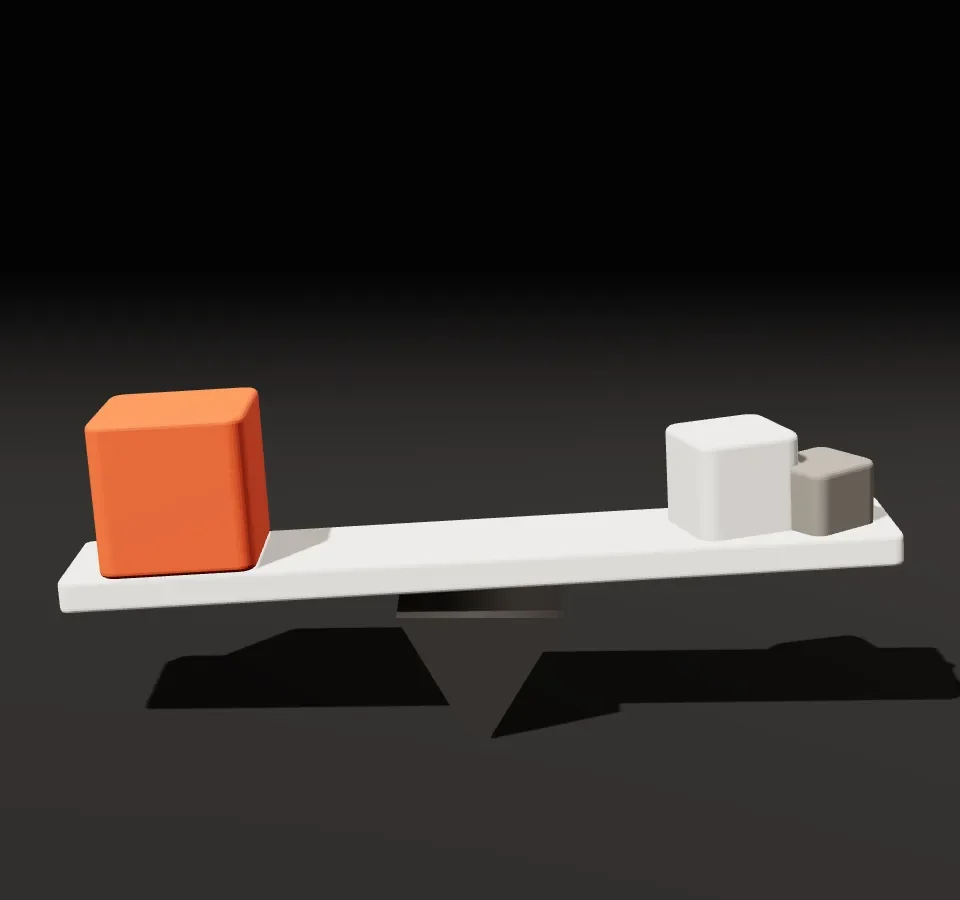
You send a light cushion weighing under a kilogram, and the invoice arrives as if you’d sent five. The courier didn’t make a mistake; you simply paid for size rather than weight. Planes and trucks fill up with space before they fill up with weight, so couriers charge for whichever is greater: actual weight or volumetric weight.
For a store sending hundreds of parcels a month, the difference between a well-fitted carton and one slightly too big can mean thousands of riyals a year. This guide explains how volumetric weight is calculated, when it applies, and how to reduce it.
What is volumetric weight?
It’s a “virtual” weight the courier calculates from a parcel’s dimensions to reflect the space it occupies:
Volumetric weight (kg) = length × width × height (cm) ÷ divisor
Then:
Chargeable weight = the greater of actual and volumetric weight
Example: a 40 × 30 × 20 cm carton weighing 2.5 kg, with a divisor of 5000. Volumetric weight = 24,000 ÷ 5000 = 4.8 kg. Chargeable weight = 4.8 kg (possibly rounded to 5 kg). You’re paying for around 2.3 kg of extra “air”.
The divisor: the number that changes everything
Each courier sets the divisor per service, and the smaller the divisor, the higher the volumetric weight of the same carton:
| Divisor | Volumetric weight of a 40×30×20 carton |
|---|---|
| 4000 | 6 kg |
| 5000 | 4.8 kg |
| 6000 | 4 kg |
5000 is common for express services, 6000 is used by some couriers and services, and values can differ between domestic, international, air and road. The only reference is your contract or your courier’s rate page. Some domestic contracts only apply volumetric weight above a certain size, others always do — ask explicitly.
Rounding: a partial kilo counts as a full one
Most couriers round chargeable weight up, to the next half kilo or full kilo. A parcel with a chargeable weight of 5.1 kg may be billed at 5.5 or 6 kg. That’s why trimming a carton by a few centimetres can sometimes drop a parcel a whole price band.
Our volumetric weight calculator lets you pick the divisor, rounding rule and number of parcels, and tells you whether a parcel is charged by volume or weight — and how many kilos you’re paying extra because of size.
Measure the carton from the outside after packing and sealing, not the product itself. Tape, filler and slight bulging at the sides add centimetres that count, and couriers measure the parcel as it reaches them.
Which products are most affected?
Light, bulky products: cushions and bedding, toys, lamps, hats, boxed shoes, empty containers and luxury packaging. Small, heavy products — glass fragrance bottles, small devices, books — are usually charged by actual weight.
Practical ways to reduce volumetric weight
1. Cartons sized to your products
One big “fits everything” carton is convenient for the warehouse but expensive to ship. Choose two or three sizes that fit your best-sellers. Even cutting 5 cm from each side of a 40×30×20 carton reduces volumetric weight from 4.8 to about 2.6 kg at a divisor of 5000.
2. Reduce empty space and filler
Filler protects the product, but lots of empty space means a bigger carton than necessary. Padded mailers are a good alternative for non-fragile products like clothing.
3. Rethink the product box
Some products arrive from suppliers in large retail-display boxes. For online sales, a smaller box or different packaging can be far cheaper without losing the premium feel.
4. Combine orders smartly
A three-item order in one well-sized carton may be cheaper than three parcels — and sometimes the reverse, if the big carton jumps to a higher band. Work out both.
5. Negotiate your contract
If your volumes are significant, discuss the divisor, the volumetric threshold and price bands with your courier, and compare more than one provider.
Volumetric weight and product pricing
Shipping cost is a core part of each order’s variable cost. If you calculate your margin on actual weight while paying on volumetric weight, your real profit is lower than you think. Enter each product’s actual shipping cost in our profit margin calculator, and check its effect on your break-even point. Watch “free shipping” offers in particular: a light, bulky product’s free shipping can eat most of its profit.
And don’t forget return shipping: a returned parcel is charged the same way, so a clear return policy and accurate photos cut the double cost, as our return policy guide explains.
International shipping
In international shipping, especially express air, volumetric weight has a bigger impact because per-kilo prices are higher. If you sell to other Gulf countries or beyond, test carton sizes against international rates specifically, because the savings multiply there.
An example: a bedding store changes its carton
A store sells bedding sets weighing 1.8 kg packed, shipped in a standard 50 × 40 × 25 cm carton. At a divisor of 5000, volumetric weight is 10 kg — so the store pays for 10 kilos on a parcel weighing under two.
After folding the product better and packing it in a compression bag, it fits a 40 × 30 × 15 cm carton with a volumetric weight of 3.6 kg. Chargeable weight dropped from 10 to 3.6 kg (or 4 kg after rounding) per parcel. Across hundreds of orders a month, that’s a big difference on the shipping bill — with no change to the product or price. The figures are illustrative; the actual per-kilo price depends on your contract.
A checklist for choosing carton sizes
- Pick your 10 best-selling products and measure each one packed.
- For each, try the smallest carton that protects it without squeezing.
- Group products into two or three size groups and choose one carton per group.
- Calculate each group’s chargeable weight using your courier’s divisor and rounding.
- Weigh the carton’s own cost against the shipping savings — a custom carton may cost slightly more but save far more.
- Review sizes every few months as your products and sales mix change.
Key takeaways
- Couriers charge for the greater of actual and volumetric weight.
- Volumetric weight = length × width × height ÷ divisor.
- Divisors and rounding rules vary by courier and service — check your contract.
- Measure the parcel from the outside after packing.
- Cartons sized to the product are the quickest route to real shipping savings.
Frequently asked questions
Does volumetric weight apply to domestic shipping in Saudi Arabia?
It depends on the courier, the service and your contract. Some services always apply it, others only above certain dimensions. Ask your provider in writing.
How do I calculate volumetric weight in inches and pounds?
Some US couriers use inches and pounds with different divisors. The easiest route is converting dimensions to centimetres (1 inch = 2.54 cm) and using the divisor your courier specifies.
Can volumetric weight be lower than actual weight?
Yes, and it’s common with small, heavy products. In that case shipping is charged on actual weight.
Every extra centimetre in a carton is paid for on every parcel. Work out your parcels’ chargeable weight now with our free volumetric weight calculator — and if you want your store’s costs reviewed from shipping to pricing, get in touch.