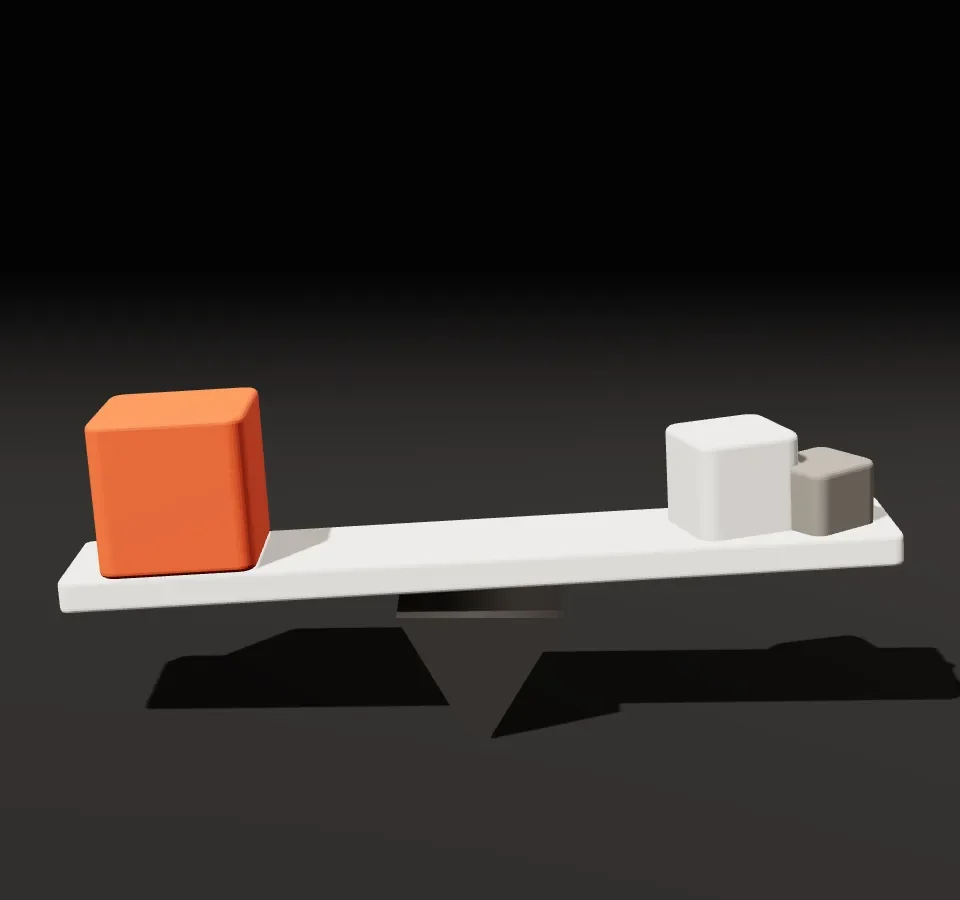
Every business starts the month at a loss. Before you sell anything, there’s rent to pay, salaries, and platform and app subscriptions. Each order covers part of those costs, and at a certain number of orders you reach zero: no profit, no loss. That’s the break-even point — and everything you sell after it is profit.
Knowing this number turns the vague goal of “I want to make money” into a clear monthly target: “I need 375 orders before I start making a profit.” This guide explains how to calculate it, what goes into it, and how to use it for real decisions.
Fixed and variable costs
The whole calculation rests on splitting your costs into two kinds:
| Fixed costs | Variable costs |
|---|---|
| Don’t change with sales volume during the month | Rise with every unit or order you sell |
| Rent, salaries, platform subscription, apps, accountant, software | Product cost, shipping and packaging, platform commission, payment fees, ad cost per order |
Some costs sit between the two. Advertising, for example: if it’s tied directly to orders (acquisition cost per order) it’s variable; if it’s a fixed monthly brand budget, it’s fixed. What matters is choosing a sensible classification and sticking to it.
Contribution margin: what each order leaves you
Contribution margin per unit = selling price (excl. VAT) − variable cost per unit
If the selling price is SAR 200 before VAT and the variable cost is 120, each unit leaves SAR 80 that “contributes” first to covering fixed costs, then to profit. The contribution margin ratio here is 40%.
The break-even formula
Break-even units = fixed costs ÷ contribution margin per unit
Break-even revenue = fixed costs ÷ contribution margin ratio
Example: fixed costs of SAR 30,000 a month and a contribution margin of SAR 80 per unit:
- Break-even = 30,000 ÷ 80 = 375 units a month, or about 12.5 units a day.
- In revenue = 375 × 200 = SAR 75,000 (before VAT).
Our break-even calculator gives you these figures instantly, plus the sales needed for a target profit and your margin of safety if you enter expected sales.
Always enter the selling price before VAT. VAT isn’t your income; including it in the price makes break-even look lower than it is, as our VAT calculation guide explains.
Target profit
Break-even isn’t a goal; it’s the minimum. To find what you need for a given profit:
Units needed = (fixed costs + target profit) ÷ contribution margin
In the example, for SAR 10,000 profit a month: (30,000 + 10,000) ÷ 80 = 500 units, or SAR 100,000 in sales. Notice that every extra SAR 80 of profit needs just one more unit after break-even — that’s the leverage effect in businesses with fixed costs.
Margin of safety: how far are you from a loss?
Margin of safety = (expected sales − break-even sales) ÷ expected sales
If you expect to sell 450 units and break-even is 375, your margin of safety is 16.7%: sales can fall by that much before you start losing money. A small margin of safety means one weak month is enough to slip into a loss, and that you should be careful with any new fixed commitment.
Using break-even for decisions
Raising or cutting prices
Raising the price from SAR 200 to 220 lifts contribution margin from 80 to 100, so break-even falls from 375 to 300 units. The right question is: will sales drop by more than 20% because of the increase? Conversely, a permanent 10% discount (SAR 20) cuts the margin to 60 and pushes break-even up to 500 units. See the full effect of discounts in our discount strategy guide.
Hiring or a new fixed commitment
An employee on SAR 6,000 a month adds 75 units to monthly break-even (6,000 ÷ 80). Will they help you sell more than that, or save the equivalent? It’s a clear way to evaluate any new fixed cost.
Cutting variable costs
Negotiating shipping down by SAR 8 per order raises the margin to 88, and break-even drops to 341 units. Sometimes a small improvement in variable cost equals a big increase in sales. To review variable costs precisely, use our profit margin calculator.
Advertising
If you include ad cost per order in variable costs, any rise in it pushes break-even up directly. That’s why linking your ad budget to break-even gives the full picture: how much you need to sell, and what each order costs to bring in.
A store with many products?
If prices and costs differ by product, use average order value and average variable cost per order from last month’s data. The result becomes the number of orders needed to break even. If your sales mix shifts a lot — say a season when a low-margin product sells more — recalculate with the new averages.
Limits of the calculation
- It assumes a fixed price and cost per unit, while in reality you may get volume discounts or run offers.
- Fixed costs aren’t fixed forever: at a certain volume you need a bigger warehouse or another employee.
- It doesn’t measure cash flow: you may be above break-even on paper while your cash is tied up in stock or receivables.
Even so, it remains one of the simplest and most powerful financial planning tools for any small or medium business.
Practical steps to calculate your store’s break-even
- Total your monthly fixed costs from your statements: rent, salaries, subscriptions, accountant, software and any equipment instalments.
- Work out average order value before VAT from last month’s sales report.
- Work out average variable cost per order: cost of goods sold ÷ orders, plus average shipping, packaging, commission and payment fees — and ad cost per order if you treat it as variable.
- Enter the numbers in the calculator and note break-even in orders and revenue.
- Divide by the days in the month to get a daily target your team can track.
- Repeat monthly and compare: is break-even getting closer or further away — and why?
The whole process takes under an hour and gives you one number that sums up your business’s financial health.
Key takeaways
- Split your costs into fixed and variable with a clear logic.
- Contribution margin = price before VAT − variable cost.
- Break-even = fixed costs ÷ contribution margin.
- Margin of safety tells you how far sales can fall before a loss.
- Judge any pricing or hiring decision by its effect on break-even.
Frequently asked questions
Should I include my own salary as owner in fixed costs?
It’s better to. If you don’t count a wage for your time, the business may look profitable while it doesn’t actually cover the value of your work.
How often should I calculate break-even?
When you start, whenever prices or fixed or variable costs change, and periodically every few months.
What if the variable cost is higher than the price?
Then you’ll never break even however much you sell, because every unit adds to the loss. Raise the price or cut the cost before anything else.
Break-even is every business’s real starting line. Work out yours now with our free break-even calculator — and if you’re launching or growing a store and want pricing and marketing built on the numbers, get in touch.